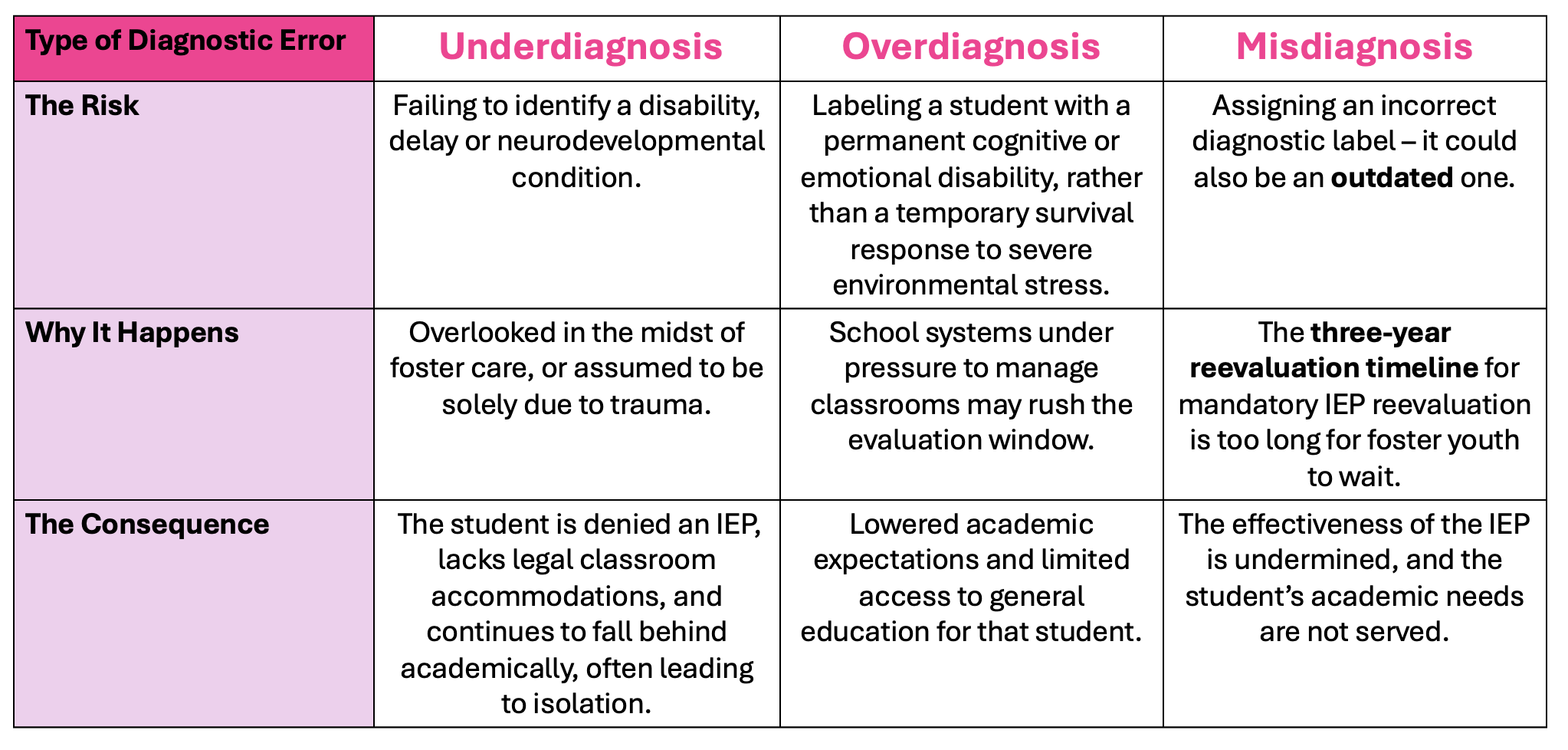
Prevalence: Between 33% and 50% of foster youth are assigned special education services, a rate nearly four times higher than the general student population. These statistics tell a story that includes trauma, displacement and school changes. Different schools doesn’t have the same curriculum, and changing schools can lead to students missing foundational elements. Each unplanned school change can set a student back academically by four to six months.
Risks of Diagnostic Errors: Accurately identifying disabilities in foster youth is highly complex because the physiological and emotional impacts of complex trauma, abuse, and neglect heavily mimic or mask the symptoms of neurodevelopmental disorders.
OHIO YAB Recommendations:
1.) Shorten the IEP Reevaluation Timeline for Youth in Foster Care
Foster youth experience disproportionately high rates of placement and school instability, causing their academic, emotional, and behavioral needs to shift rapidly. To ensure their accommodations remain accurate and effective, it is recommended that the mandatory Individualized Education Program (IEP) triennial (three-year) reevaluation timeline be shortened. Implementing more frequent, mandatory formal evaluations for this population will prevent service gaps, reduce diagnostic errors, and ensure support plans adapt to the child’s current environment.
2.) Standardize Statewide IEP and 504 Plan Training for Ohio Foster Parents and Caseworkers
To ensure equitable educational advocacy across all 88 counties, the State of Ohio should implement a mandatory, consistent training curriculum regarding Individualized Education Programs (IEPs) and Section 504 plans for all foster parents and caseworkers. Standardizing this education statewide will equip caregivers and professionals with the uniform knowledge needed to navigate Ohio’s educational system, identify when a youth qualifies for accommodations, and actively participate in the compliance and review process.

