
The establishment of a Tiered Foster Care Model has been proposed to meet the needs of youth. Ohio foster care youth and alumni believe this approach will be most successful if youth voice is incorporated into:
a.) How the needs of foster youth are communicated to caregivers (ICCA form)
b.) How the needs of foster youth are assessed (CANS assessment)
c.) How foster parent parents are trained (youth review of trainings)

1.) Transforming the ICCA Form: The OHIO YAB greatly appreciates ODJFS being willing to participate in ongoing conversations about how to improve the ICCA form. Historically, youth have expressed concerns that the ICCA form is not strengths-based and can be an impediment to finding a placement. Details that would be helpful to support the success of placements include: (a.) context, (b.) triggers, (c.) coping strategies.
• On Monday, May 16, 2022, OHIO YAB youth ambassadors presented during the Ohio Citizen’s Review Panel’s annual strategic planning meeting, and described challenges and opportunities related to the ICCA form
• On Thursday, July 20, 2022, representatives of ODJFS attended a statewide OHIO YAB meeting to share the updated version of the ICCA form, as well as a new addendum to incorporate youth voices and insights.

2.) Questions About the CANS Assessment: The OhioRISE program uses the Ohio Children’s Initiative Child and Adolescent Needs and Strengths (CANS) tool to establish eligibility for Medicaid billable services. While this might be helpful from a billing stance, it does not make for a strength-based method of capturing the development of coping skills.
When youth initially reviewed the CANS assessment, for the purpose of determining its helpfulness as a tool to assist with Tiered Foster Care, they noticed similar challenges and opportunities to those of the ICCA form. Ohio youth leaders participated in a follow up virtual meeting with Roger Ward to review the updated questions and share their feedback. They liked that the questions were based on the 40 Developmental Assets, as developed by the Search Institute.
Similarly, the first draft of Tiered Foster Care Characteristics that youth received was focused on external behavior, rather than the needs of the child. At the time, Ohio youth leaders mapped out challenges and opportunities related to this document. Details that would be helpful to support the success of placements are: (a.) context, (b.) triggers, (c.) coping strategies.
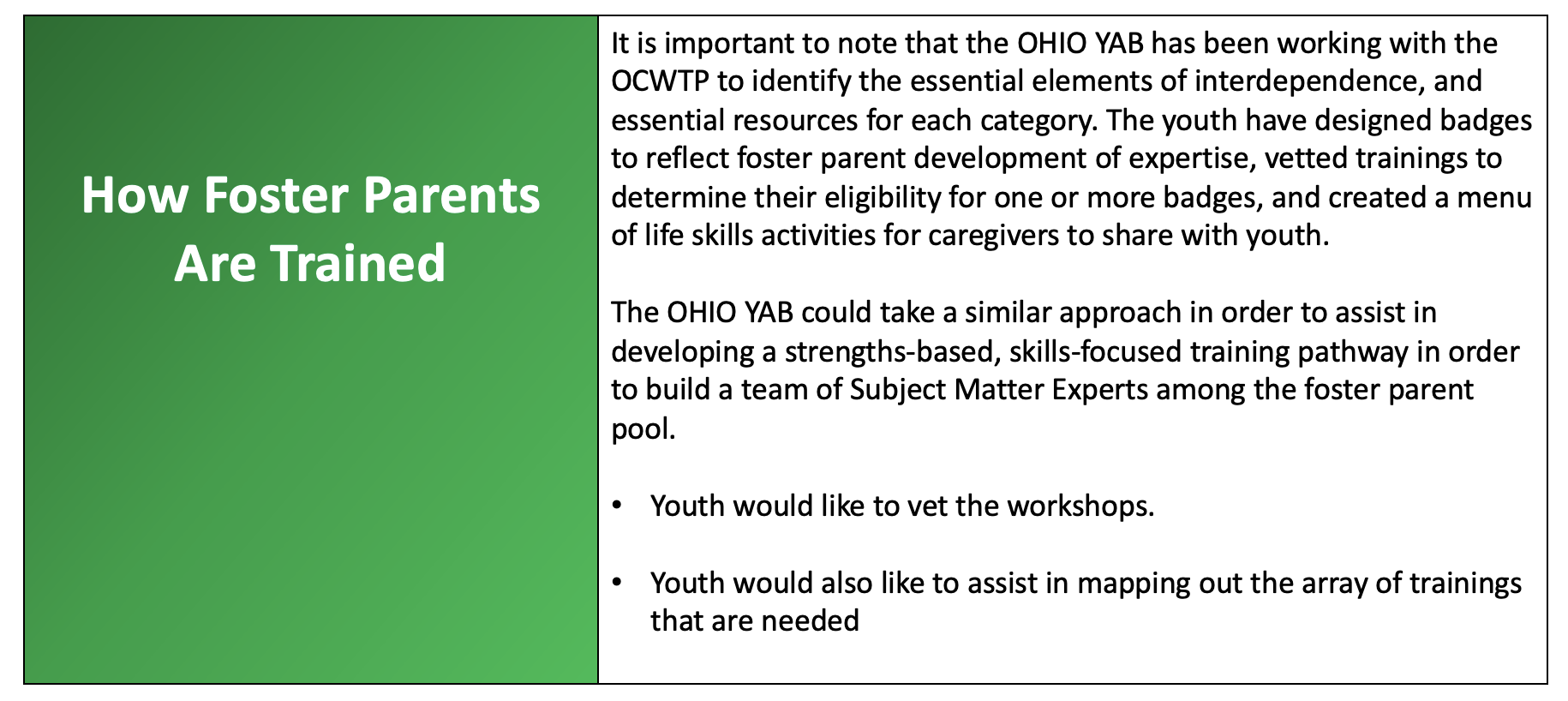
3.) Training Foster Parents to Help Youth Develop Coping Skills: The OHIO YAB would love to work on this project. It would be similar to their current work on the Life Skills pathway. They believe this approach would help to identify and build Subject Matter Experts among foster parents. Training badges could reflect foster parent comfort and expertise with supporting, empowering and preparing specific youth populations, such as foster youth who are teen parents.
The array of youth-vetted trainings could include the following:

 fosteractionohio