The federal Pell Grant is a vital resource for youth who have experienced out-of-home care, including foster care, kinship care, congregate care placements and those who were adopted at an older age. It increases enrollment and retention in higher education.
The future of this resource is currently in jeopardy due to the Pell Grant reserve crisis.
The OHIO YAB and ACTION Ohio signed onto a March 2026 letter to express concerns and propose solutions.
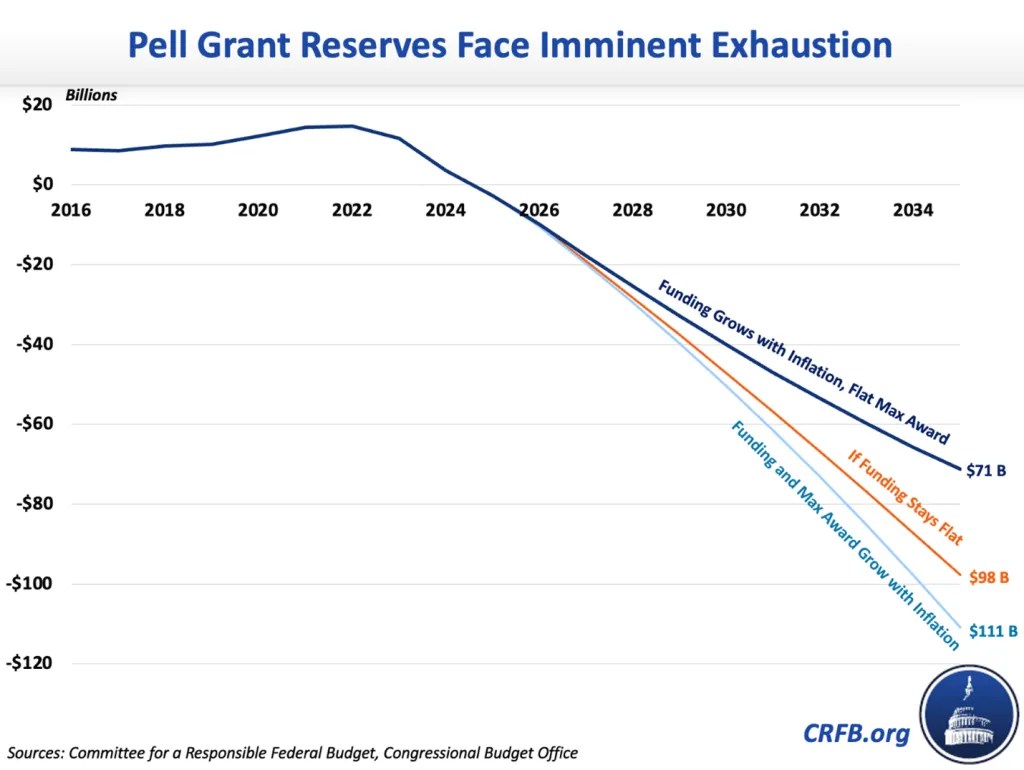
The Pell Grant program was expected to run out of reserves by the end of 2025, and to face a $71 billion to $111 billion ten-year shortfall, based on data from the Congressional Budget Office (CBO).
The Pell Grant is only allowed to be in shortfall for one year before the awarded amount is automatically cut in order to reduce the cumulative shortfall to zero. Because the Pell shortfall isn’t in the official spending baseline yet, it didn’t need to be addressed by the March 14 deadline to pass a federal budget. But Congress needed to act sometime before Sept. 30, 2025, the start of fiscal year 2026.
Recent projections from the Congressional Budget Office show the Pell Grant program faces a significant budget gap—with an estimated $5.45 billion gap for fiscal year (FY) 2026 and an $11.5 billion gap projected for FY 2027. This $16.95 billion shortfall represents a looming threat to students’ ability to attend and afford higher education if not addressed promptly.
Lack of college access has an impact on economies and can lead to the closing and merging of universities and colleges.
The last time Pell faced a shortfall, in 2012, “it led to cuts that have hobbled the program’s impact ever since. Congress lowered the number of semesters a student is eligible for the grant from 18 to 12, a particularly rough outcome for community college students, adult learners and part-time stop-outs. They also changed Pell Grants from year-round payouts to strictly focus on the traditional academic year, cutting off aid for summer classes. Year-round Pell was restored in 2017, under the first Trump administration, after a significant push from lobbyists and advocates.”
In 2024, federal legislation was introduced, the Pell Grant Preservation and Expansion Act, but this effort has not yet moved forward.
Our first joint letter to Congress, the wording of which was authored by the Institute for College Access and Success (TICAS), was sent on February 26, 2025. We signed onto a second joint letter on June 6, 2025.
Further Reading
Pell Grant Program is In Serious Trouble.
How Will The $2.7 Billion Pell Grant Funding Gap Impact Students?
Amid Federal Upheaval, a Pell Shortfall Looms
Concerns Expressed about Recent Budget Proposal
Short-Term Pell Could Increase Risk of a Program Shortfall
Foster Care Specific Research
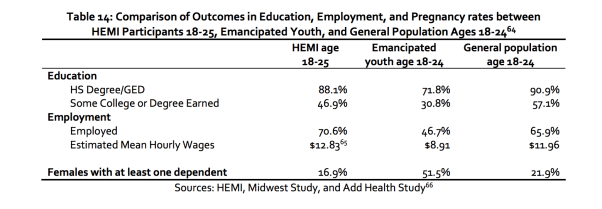
In 2017, an economic research study was conducted by the University of Cincinnati’s Economics Center for Education and Research. It followed Hamilton County foster youth outcomes between 2008–2015. This study demonstrated that investing in post-secondary supports for foster youth not only created a positive effect on social outcomes but also led to lower net costs per county. The return on investment for the one-year sample period was 248 percent.
Foster youth who received post-secondary support were more likely to graduate, obtain employment, and had a higher median wage. They were less likely to require social and emergency support services. These positive effects on social outcomes also contributed to lower net costs for the county.
Here is a link to the 2017 HEMI Research Study is a 2017 economic research study that followed Hamilton County foster youth outcomes between 2008-2015.
 fosteractionohio