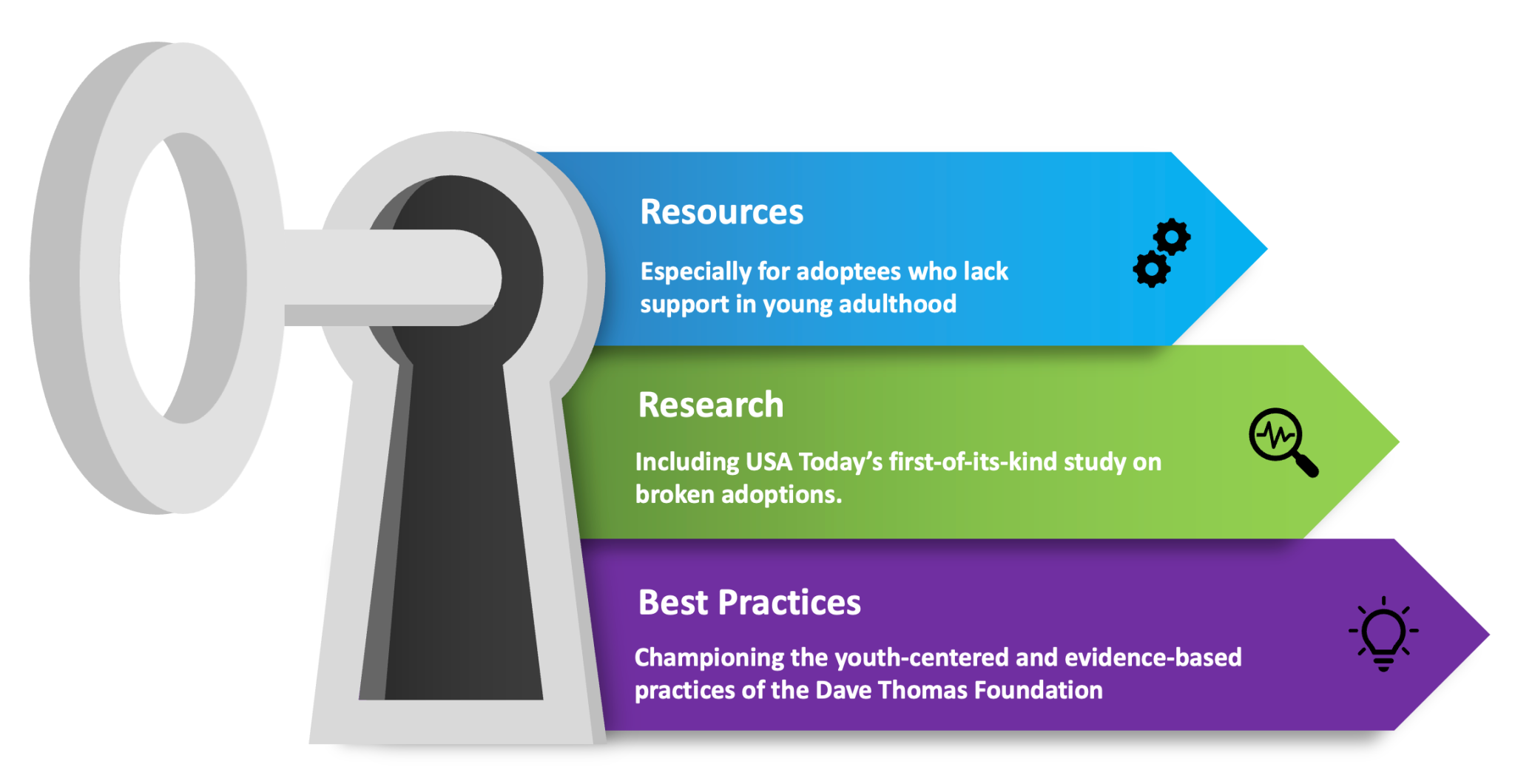
As exemplified by The Dave Thomas Foundation, when adoptions are youth-centered, they can effectively help children, teens and sibling groups find permanent connections. Sadly, not every adoption utilizes a Wendy’s Wonderful Kids approach. We deeply appreciate the tireless dedication of The Dave Thomas Foundation and recommend their evidence-based practices. When adoptions aren’t done right, outcomes can go wrong…
National Research:
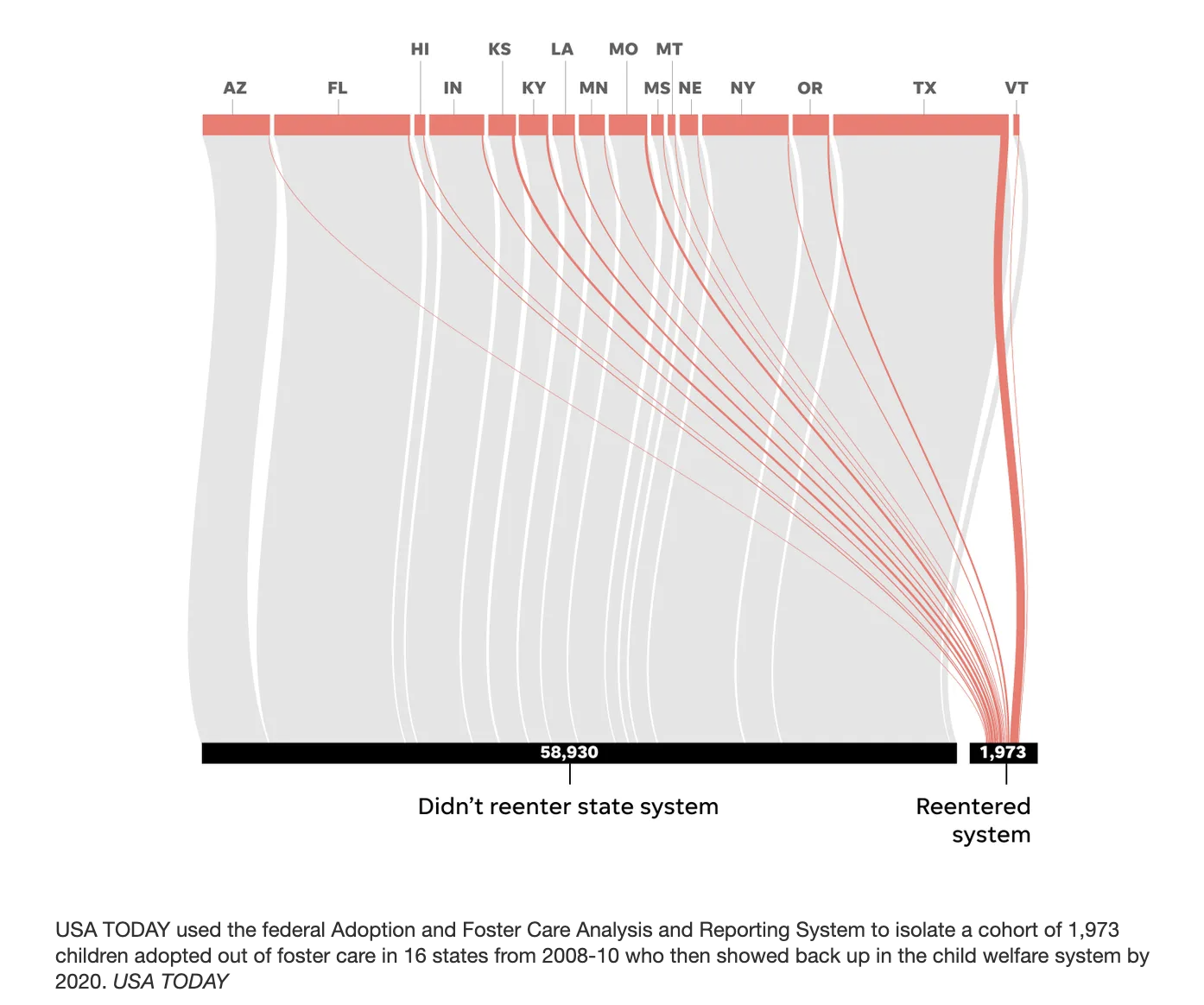
In 2022, USA Today released state-by-state adoption data. They found that, on average, 12 adoptions fail every day. More than 66,000 adoptees ended up in foster care between 2008-2020. Their analysis revealed that older youth, youth of color and youth with disabilities were most likely to return to foster care.
USA Today also noticed errors, omissions and discrepancies in AFCARS data. For example, in over 400,000 cases, records failed to indicate if the child or teen had previously been adopted. AFCARS data does not capture information about children or teens whose adoptions fail, but they do not end up in foster care. Rather, these young people might move in with family or friends, be privately re-adopted, return to their birth family or end up homeless. They might also end up in a for-profit residential facility; this study found that despite representing 2% of the population, adopted youth make up 25-30% of the total population in those facilities.
Likewise, when states report to AFCARS, children and teens are supposed to each have a unique identification number that stays with them over time. This can enable researchers to track if youth are adopted and then return to foster care. A 2020 study found that 16 states submit data to AFCARS in this way. Ohio is not one of them.
OHIO YAB members have expressed concerns about adoptive parents who receive subsidies, and then abandon adoptees at or after the age of 18. In New York, the Children’s Law Center was a pioneer in studying disrupted adoptions. They founded the Broken Adoptions Project in 2011. They set up a helpline, posted flyers and listened to children, teens, and young adults whose lives were impacted by the loss of an adoptive connection.
The Broken Adoption Project advocates for youth in New York who are impacted by the loss of an adoptive connection:
- To have their voice heard in court or non-court proceedings that impact them.
- To be fully informed about the possible outcomes of their situation.
- To be fully informed about their options regarding sibling contact (if siblings are a topic they want explored).
- To be connected with a stable, caring adult and appropriate services to help them move successfully into their adult lives.
The OHIO YAB would like to create similar supports in our state. Young people whose adoptive parents fail to provide for them during young adulthood are often ineligible for supports that are provided to “aging out” foster youth. This makes that transition lonely and difficult for them.
Here in Ohio, the Adoption Assistance Program to 21 is only available to young people who were adopted from an Ohio Public Children Services Agency at age 16 or 17, and whose adoptive parents are maintaining parental responsibility. This means that if the adoptive parents are no longer providing support, the adoptee is ineligible.
Ohio youth leaders have asked, “Why punish an adoptee and make them ineligible to receive help if their adoptive parents no longer provide for them? Isn’t this the population that needs help the most? And if they are abandoned at or after age 18, why should it matter how old they were when they were adopted in the first place?”
We’ve learned that:
Connecticut’s Post Adoptive Tuition Program follows the young person even if (especially if) their adoptive family no longer provides for their needs or supports them during young adulthood.
Connecticut’s Sun Scholars serves foster and adopted youth throughout the state and supports them with college graduation and career development. This program is founded and led by a former foster youth, and everyone who is a full-time staffer and over 50% of their board has spent time in foster care.
At Southeastern Louisiana University, the Ira S. Tate Scholarship is given annually to adopted full-time undergraduate students residing in Baton Rouge who have been abandoned by their adoptive parents after turning 18 years old.
The state of New York is currently considering a bill that would have the adoption subsidy follow the child in cases of disrupted adoption; if passed, this would be the first bill of its kind in the nation.
Best Practices:
The Dave Thomas Foundation’s adoption model is based on making sure that youth come first when it comes to adoption decisions. They firmly believe that it’s most important to listen to each youth’s experience, history and needs. Their program focuses on finding permanency for youth who are most at risk of “aging out” of foster care: older youth, sibling groups, minority groups, children who have been in foster care for a long time, and/or have experienced a previous failed adoption.
The Wendy’s Wonderful Kids model is unique in its youth-focused recruitment efforts, which focus on relationship building with the young person and diligent search for the right family. WWK recruiters have small caseloads, and are trained to focus on finding a home that would be the best fit for the unique needs of each child, teen or sibling group. WWK is the only adoption program in the nation to use this evidence-based model.
 fosteractionohio